
Key takeaways
- The record is the clinical chart a licensed clinician builds while examining you: what happened, what hurts, what the exam found, what the plan is, and the date.
- It is a care document first. It exists so the next clinician works from facts, not memory.
- For a spine with a curve, the baseline problem is harder and the answer is more valuable. An exam in the first week fixes the moment in time.
- If days or weeks have already passed, go anyway. A later exam is still a real exam, and honesty about the timeline is part of the record.
- This desk does not coordinate claims, hold paperwork, or speak to insurers. The clinic treats patients, not files.
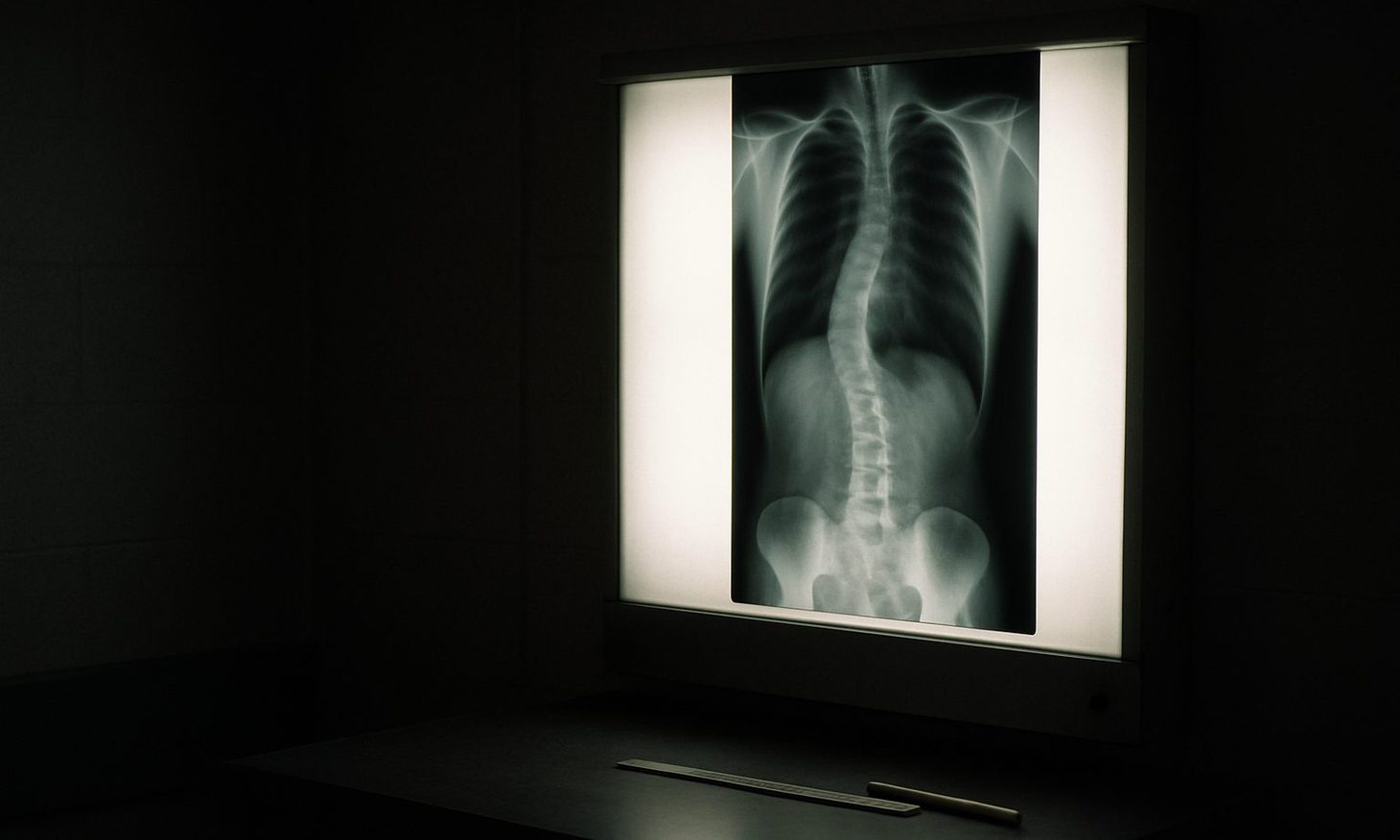
There is a folder somewhere in your house. It has films in it, or a disc, or a printout of a report with a number of degrees circled. It might go back to a school screening decades ago. People who live with a curve are, without ever choosing to be, record keepers. You know what your spine measured at fourteen and at thirty. You know which direction it goes. You have compared this year's film to last year's with a clinician, looking for change. The idea that a measurement taken on a known date is worth more than a memory is not new to you. This page is about applying that idea to a single event you did not plan for.
What the record actually is
The record is the clinical chart a licensed clinician builds while examining you: what happened, what hurts, what the exam found, what the diagnosis is if the findings support one, what the plan is, and the date all of it was written down. It is a care document first. It exists so that you, the next visit, and any clinician who comes after are working from the same facts instead of somebody's memory of a bad week.
Missouri Injury Clinic publishes three lanes on moinjuryclinic.com: auto injuries, meaning diagnosis and a treatment plan after a crash; TBI and concussion rehab; and sports injuries. An exam in any of those lanes produces a record because that is how treatment works, not because a webpage told you to collect paper. This desk is a reading desk. It cannot examine anyone and it does not hold anyone's chart.
The baseline problem, solved early
The central question after any crash is what changed. For most people that question is answered by comparing the injured body to an assumed normal. For a spine with a curve there is no assumed normal. Your baseline is particular: a specific curve, a specific pattern of tight and loose, a specific set of joints that have always been a little sore. That makes the question harder and the answer more valuable.
An exam performed in the first week, with findings written down, fixes the moment in time. It says: on this date, this spine, with this curve, presented with these findings after this crash. Everything after can be compared against it. A change two weeks later is a change from something measured rather than a guess. Six months later, when someone asks whether the neck pain is the crash or the curve, there is a dated document that was written before anybody had a reason to wonder.
That is a clinical reason, not a money reason. This page does not put a number on anyone's claim and it will not pretend paperwork is treatment. But the clinical reason happens to serve everyone who later acts in good faith, which brings us to the next section.
For anyone helping with the aftermath
Crashes come with paperwork, insurers, and sometimes a professional helping manage the file. Whoever that is, their first request will be the medical record, and a record that clearly separates a pre-existing curve from a fresh injury is worth a great deal to everyone involved. A vague record invites the argument that everything you feel is the curve you always had. A clear one, written in the first week by someone who asked about the curve before asking about the crash, answers that argument before it is made.
If you already have an attorney, bring their contact to the first visit so records can be sent where they need to go. If you do not, nothing about the exam changes. You do not need to have decided anything about a claim before you get examined. This publication does not advise on claims, and the clinic treats patients rather than files. The point is quieter: good documentation serves the truth, and the truth is what serves you.
If time has already passed
Readers with a curve are especially prone to waiting, because waiting is usually the right call for a curve. If you are reading this three weeks after a wreck with a neck that never quite settled, go anyway. A later exam is still a real exam. Tell the examiner the real timeline: the date of the crash, what you felt that night, what you felt on day three, and what you have done since. Being honest about the gap is part of the record. A clinician who knows the body has had three weeks to compensate reads the findings differently, and correctly.
What the record is not
Joseph L. Hollingsworth, DC, is a chiropractor. Missouri Injury Clinic is a chiropractic injury clinic, not a law office, and nothing here is legal advice or a comment on anybody's insurance dispute. This desk does not coordinate claims, hold paperwork, arrange payment, or speak to insurers for you. If money or coverage is the question, ask the clinic on the phone and take the answer from them. We also do not diagnose. Everything above is about getting examined by a person who can.
The record is also not a substitute for your regular scoliosis follow-up. Keep whatever monitoring arrangement you have. The crash exam is one chapter; your curve's long record continues on its own schedule, and degrees and decades is about that longer story.
Fix the moment in time.
The record is a care document first. It exists so the next clinician works from facts, not memory. Get the first exam written down this week, and tell the examiner about your curve so it lands in the record.
Missouri Injury Clinic · Joseph L. Hollingsworth, DC · offices close 12 to 2 · all offices
Advertising disclosureThis page is advertising. This desk is compensated for featuring Missouri Injury Clinic, and it is not the clinic, not a law office, and not a party to anyone's insurance claim. We publish only the lanes, offices, and hours the clinic publishes on moinjuryclinic.com. We do not write reviews, rank providers, or give medical or legal advice.