Key takeaways
- A curve makes the muscles on one side work harder than the other, all day, every day. That asymmetry is where most of the everyday ache comes from.
- Stiff mornings, a sore convex side, a neck that complains after a drive, and a flare after unusual effort are ordinary for a curve.
- What helps is unglamorous: movement, strength on the side that is slacking, breaks from sitting, and a clinician who knows your baseline.
- The everyday ache stops being everyday when it changes character: new location, new side, new numbness, or a clear event like a fall or a crash.
- A chiropractic exam can document your baseline and treat the complaints that come with a curve. It cannot, and should not promise to, change the degrees.
Ask anyone with a curve what it is like and they will not talk about degrees. They will talk about the chair at their mother's house, the way the left shoulder blade complains by three in the afternoon, the drive to Columbia that costs them a day, and the stretch they do every morning without quite knowing whether it works. That is the everyday ache. It is not dramatic and it is not nothing, and most of the writing about scoliosis ignores it entirely in favor of bracing debates and surgical thresholds. This dispatch is for the rest of the time.
Why one side always works harder
Picture the spine as a mast and the muscles along it as rigging. When the mast is straight, the rigging on both sides shares the load. When the mast curves, the rigging on the outside of the curve, the convex side, is stretched and working constantly to keep the mast from tipping further, while the rigging on the inside, the concave side, shortens and stiffens because it is never asked to lengthen. Neither side ever gets to rest in the way a symmetrical spine's muscles do.
That is the source of most everyday complaints. The convex side aches from overwork. The concave side feels tight and limited. The small joints at the apex of the curve, where the bend is sharpest, see more wear than their neighbors. The pelvis and shoulders make their own quiet adjustments to keep the eyes level and the head over the feet, and they occasionally send the bill for that work in the form of hip pain or a sore neck.
The ordinary complaints, named
- The stiff morning. Muscles that guarded all night are slow to let go. Most readers have a routine for this, and most routines involve heat, movement, or both.
- The three o'clock shoulder blade. The convex-side muscles, having worked since six, start to complain. Sitting still makes it worse.
- The neck after a drive. A curve that rotates the rib cage a few degrees means the head has to turn a little further to check the mirrors, thousands of times. We wrote the long commute about this one.
- The flare after effort. A weekend of mulch, a move, a long flight. The asymmetric system gets overloaded and takes a few days to settle.
- The hip that is not the problem. Pelvic compensation for a lumbar curve often shows up as a sore hip on one side that no hip treatment ever seems to fix.
What people actually do about it
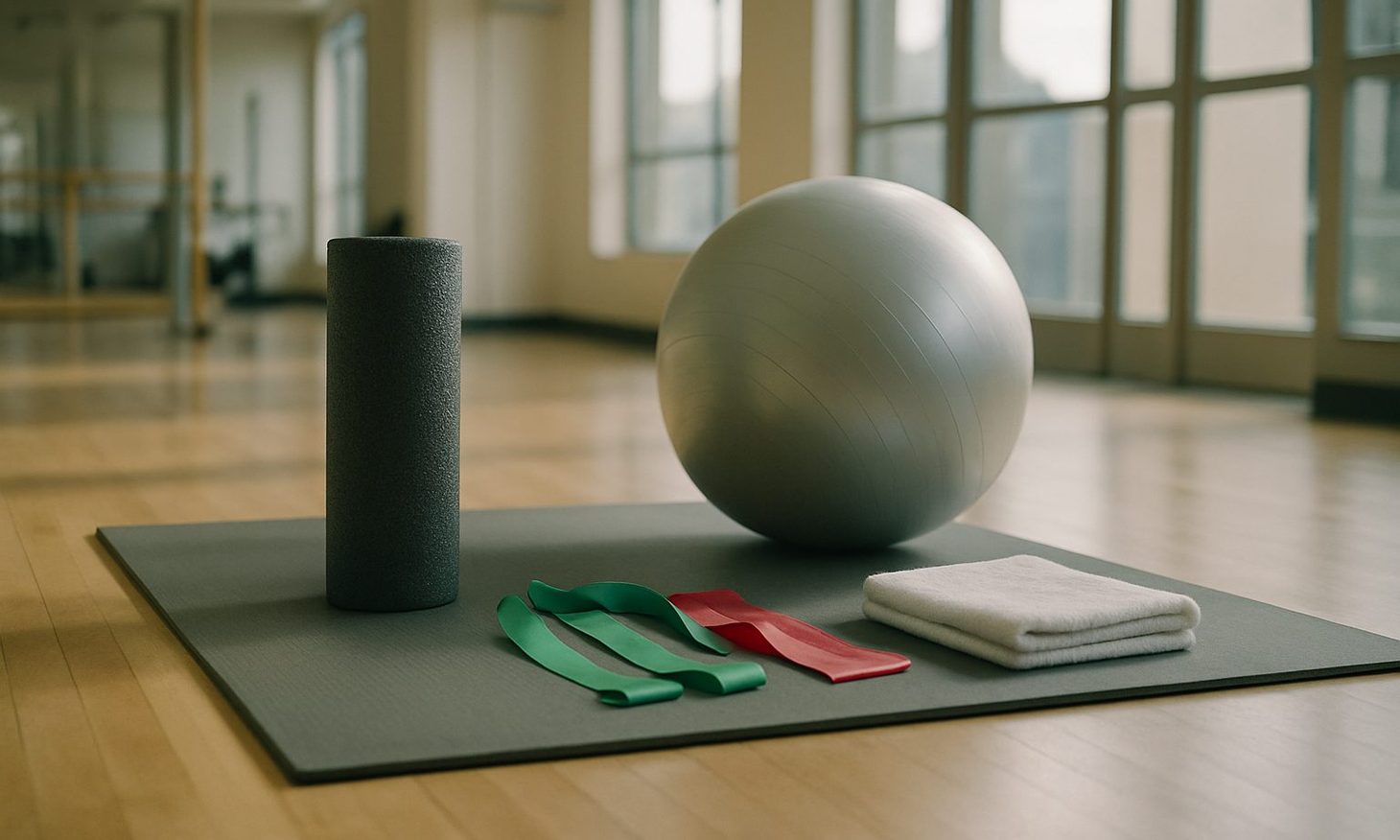
Unglamorous things, mostly. Movement is the consistent winner; a spine that moves through its range regularly tends to complain less than one that is held still. Strength on the side that slacks, the concave side, is a common goal in the exercise programs clinicians write for curves, and it is the reason the mat in the photograph has bands on it. Breaks from sitting matter more for a curve than for a straight spine, because sitting loads the system unevenly and the muscles cannot shift the load around the way a symmetrical back can. Sleep position, a decent chair, and not carrying a bag on the same shoulder for twenty years all turn out to matter.
And a clinician who knows your baseline. The single most useful thing about having a regular examiner for a curve is that they know what your ordinary looks like, which means they can tell you when something is not ordinary. That is also the thing a crash exam borrows, as the record explains.
When the everyday stops being everyday
The skill of living with a curve is knowing your pattern. The risk of living with a curve is assuming everything is the pattern. The everyday ache stops being everyday when it changes character rather than volume: a new location, the side that never hurts, numbness or tingling into an arm or leg, a headache that was never part of it, or a clear event such as a fall, a hard tackle, or a crash. Any of those is a reason to be examined by someone who can tell the difference, and after a crash it is a reason to be examined this week. The slow week explains why the change can take a few days to announce itself.
The bright line
Chest pain, a sudden severe headache, weakness or numbness on one side, trouble speaking, a loss of bowel or bladder control, or a head injury with vomiting or worsening confusion is an emergency room trip right now, not a call to a clinic. Nothing in the everyday ache looks like that, and if something does, it is not the everyday ache.
Know your baseline, on paper.
An examiner who has seen your ordinary can tell you when something is not. For the complaints that come with a curve, and for the one week after a crash, Missouri Injury Clinic examines, documents, and writes a plan.
Missouri Injury Clinic · Joseph L. Hollingsworth, DC · offices close 12 to 2 · all offices
Advertising disclosureThis page is advertising. This desk is compensated for featuring Missouri Injury Clinic, and it is not the clinic, not a law office, and not a party to anyone's insurance claim. We publish only the lanes, offices, and hours the clinic publishes on moinjuryclinic.com. We do not write reviews, rank providers, or give medical or legal advice.